
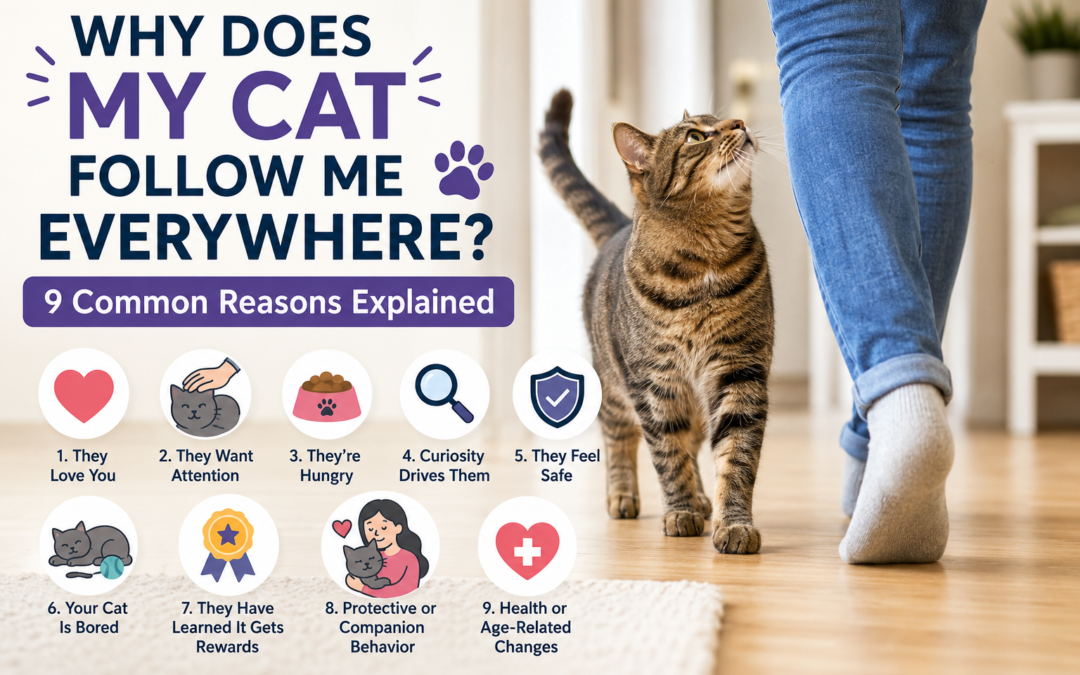
If your cat seems to appear wherever you go—whether you’re heading to the kitchen, bathroom, bedroom, or even working at your desk—you may wonder why your feline companion follows you everywhere. While cats are often known for their independent nature, many develop strong bonds with their owners and enjoy being close to them throughout the day.
Understanding why your cat follows you can help strengthen your relationship and ensure your pet is happy and healthy. Here are nine common reasons why cats follow their owners everywhere.
1. Your Cat Loves and Trusts You
One of the most common reasons cats follow their owners is simple: they love you. Cats may not always show affection in obvious ways, but following you around the house is often a sign of trust and attachment.
When a cat feels safe and comfortable with someone, they naturally want to stay close. If your cat greets you at the door, sleeps near you, or follows you from room to room, it likely means they enjoy your company and consider you an important part of their world.
2. They Want Attention
Cats can be surprisingly social animals. Some breeds, such as Siamese and Maine Coon cats, are especially known for their affectionate personalities.
If your cat follows you while meowing, rubbing against your legs, or pawing at you, they may simply be seeking attention. They could be asking for petting, playtime, or interaction. Spending quality time with your cat each day can help satisfy their social needs and reduce attention-seeking behaviors.
3. They’re Hungry
Many cats quickly learn that humans are the source of food. If your cat follows you around near mealtime, they’re probably reminding you that dinner is due.
Some cats become particularly persistent when they believe food is involved. They may follow you into the kitchen, sit near their food bowl, or meow repeatedly until they get fed.
If your cat’s following behavior is mostly focused around feeding times, hunger is likely the main reason.
4. Curiosity Drives Them
Cats are naturally curious creatures. They enjoy investigating their surroundings and keeping track of household activities.
When you move from one room to another, your cat may simply want to know what you’re doing. Whether you’re opening a cabinet, folding laundry, or working on a project, your cat may see your actions as something worth exploring.
Curiosity is a natural feline instinct and often explains why cats seem interested in even the most routine daily tasks.
5. They Feel Safe Around You
Your presence can provide comfort and security for your cat. This is especially true for shy, anxious, or newly adopted cats.
When cats feel uncertain about their environment, they may stay close to the person they trust most. Following you can help them feel protected and confident.
If you’ve recently moved, introduced a new pet, or experienced changes in your household, your cat may become more attached and seek reassurance through your presence.
6. Your Cat Is Bored
Indoor cats can sometimes become bored if they don’t receive enough mental and physical stimulation. Following their owner can become a form of entertainment.
Cats need opportunities to play, hunt, climb, and explore. Without enough enrichment, they may rely on you as their primary source of excitement.
Interactive toys, scratching posts, puzzle feeders, and regular play sessions can help keep your cat engaged and reduce boredom-related behaviors.
7. They Have Learned It Gets Rewards
Cats are excellent at learning patterns. If following you often leads to food, treats, petting, or playtime, your cat may continue doing it because it has been rewarded in the past.
For example, if your cat follows you into the kitchen and you frequently give them a treat, they quickly learn that staying close to you can have positive outcomes.
This behavior is a form of reinforcement, and many cats become experts at using it to get what they want.
8. They’re Showing Protective or Companion Behavior
While cats are not typically considered protective in the same way as dogs, they can still develop strong companion instincts.
Some cats enjoy monitoring the activities of their favorite human. They may sit nearby while you work, watch you cook, or accompany you as you move around the house.
This behavior can be a sign that your cat views you as a member of their social group and wants to remain connected throughout the day.
9. Health or Age-Related Changes
If your cat suddenly starts following you more than usual, it’s important to consider possible health issues.
Older cats may become more dependent on their owners as their senses change with age. Conditions such as anxiety, cognitive decline, vision problems, or discomfort can lead to clingier behavior.
Likewise, younger cats may seek extra comfort if they are feeling unwell. If the behavior appears suddenly and is accompanied by changes in eating, sleeping, grooming, or litter box habits, consult your veterinarian for a professional evaluation.
When Should You Be Concerned?
In most cases, a cat following you around is perfectly normal and often a sign of affection. However, excessive clinginess combined with other unusual symptoms may indicate stress, anxiety, or a medical condition.
Watch for signs such as:
- Loss of appetite
- Increased vocalization
- Lethargy
- Aggression
- Changes in litter box habits
- Sudden personality changes
If you notice any of these symptoms, schedule a veterinary checkup to rule out underlying health concerns.
Final Thoughts
Cats follow their owners for many reasons, including affection, curiosity, hunger, comfort, and companionship. In most situations, this behavior is a positive sign that your cat trusts and enjoys being around you.
By understanding your cat’s motivations, you can better meet their emotional and physical needs while strengthening your bond. Whether your feline friend is seeking attention, looking for food, or simply enjoying your company, their constant presence is often one of the clearest signs that they feel safe and happy with you.